Collision Center 1 Prior Lake Explains Final Collision Repair Checks
Prior Lake, MN - November 18, 2026 - PRESSADVANTAGE - Collision Center 1 Prior Lake is highlighting the importance of
Press Release Disclaimer: This is a press release distributed through the XPR Media network. It has not been independently verified by our newsroom.

Prior Lake, MN – November 18, 2026 – PRESSADVANTAGE –
Collision Center 1 Prior Lake is highlighting the importance of final collision repair inspections as Minnesota drivers prepare for winter road conditions. The auto body repair facility, located at 16111 Main Ave SE in Prior Lake, is sharing November consumer guidance explaining how exterior inspections, functional testing, electronic system verification, and repair documentation contribute to determining whether required repairs have been completed before a vehicle is returned to its owner.
The guidance addresses an important distinction in collision repair: restoring a vehicle’s visible appearance does not necessarily mean every affected component or system has been evaluated. Final verification procedures help identify outstanding concerns after bodywork, refinishing, and reassembly, with the required checks determined by the original damage and completed repair operations.
As shorter daylight hours and colder weather become more common across Minnesota, the condition of exterior lighting, repaired body openings, and weather seals becomes particularly relevant. These components may require verification when they have been affected by a collision or disturbed during repairs.
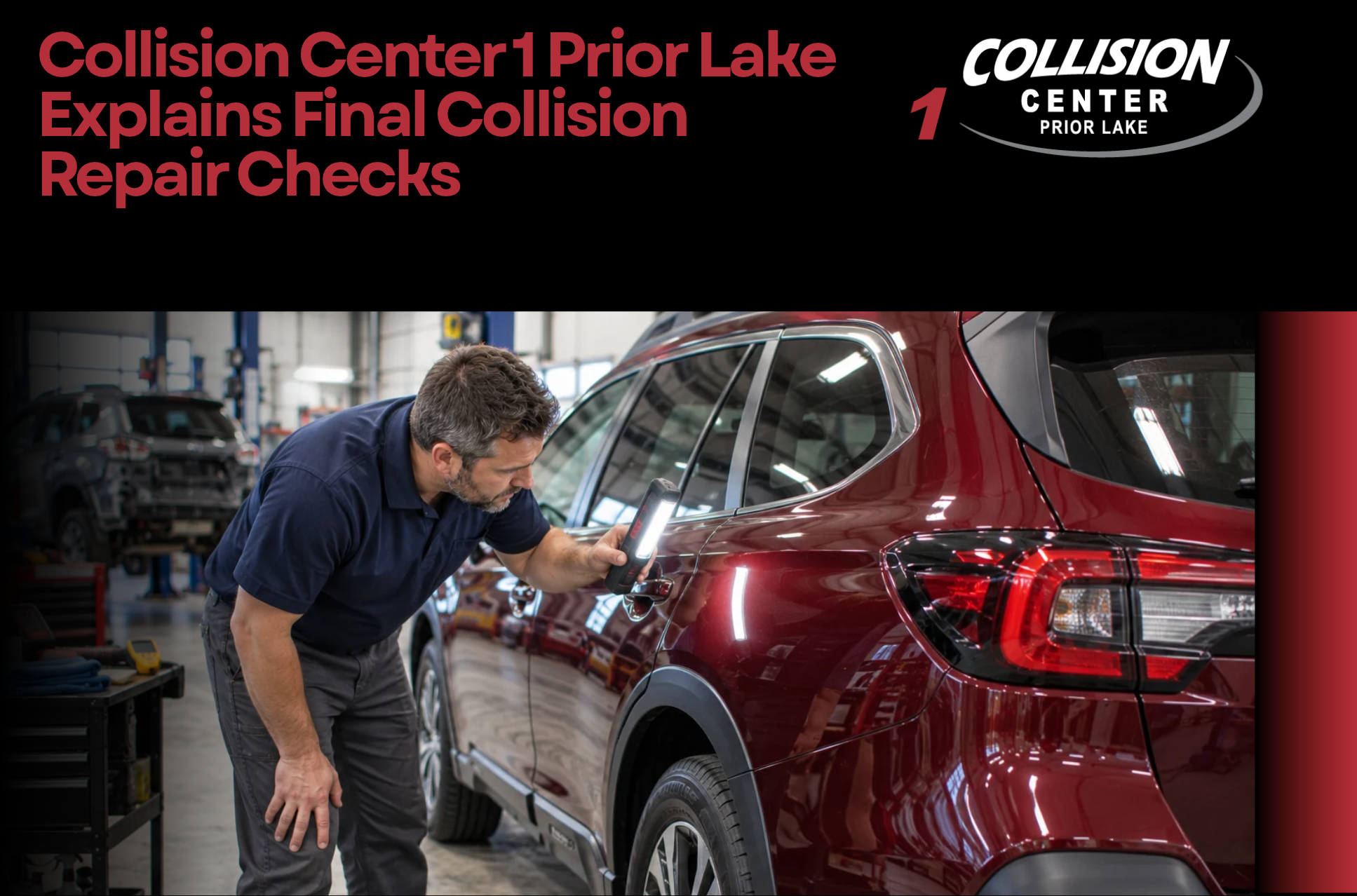
Exterior inspection is one of the primary considerations during the final repair review. Technicians may evaluate repaired body panels for alignment, consistent gaps, surface contours, and paint finish quality. Doors, hoods, trunks, and liftgates may also require inspection to confirm that affected components fit and operate as intended.
A repaired panel can appear properly positioned while still requiring adjustments to surrounding components. Uneven gaps, interference during movement, or difficulty engaging a latch may indicate that additional evaluation is necessary before the vehicle is released.
Collision Center 1 Prior Lake provides auto body repair services involving accident-related exterior damage, panel restoration, and refinishing. Final inspections help evaluate the condition of repaired surfaces and affected components following these operations.
Functional verification extends beyond exterior appearance. Depending on the repairs performed, technicians may check lighting assemblies, windows, mirrors, weather seals, and components removed or replaced during disassembly. These checks help identify operational concerns that may not be visible during a basic exterior inspection.
For example, a replaced exterior light assembly may require confirmation that its functions operate correctly after installation. A repaired door may also require evaluation of its closing operation, latch engagement, and surrounding seals when those components were affected by the collision.
Collision Center 1 also provides collision repair services addressing damage that may involve underlying vehicle structures or mechanical components. When a collision affects structural areas, suspension-related components, or other systems, additional inspections or measurements may be required according to the repair plan.
Electronic system verification is another consideration for modern vehicles. Cameras, parking assistance systems, occupant protection equipment, and advanced driver-assistance technologies may be affected by collision damage or certain repair operations.
Depending on the vehicle, final verification may involve diagnostic scanning, functional testing, system initialization, or calibration. These procedures serve different purposes and must be selected according to the affected components and applicable manufacturer instructions.
Diagnostic scanning can identify certain electronic faults or stored trouble codes, but it does not independently confirm that all affected systems are operating correctly. Calibration may be necessary after specific repairs involving cameras, sensors, or related components. Not every collision requires these procedures, making vehicle-specific repair information important.
Industry training organization I-CAR provides educational resources covering modern vehicle repair technologies and the importance of accessing current manufacturer repair information. These resources offer general industry context for understanding why certain collision repairs require verification beyond visible body restoration.
Repair documentation also contributes to the completion review. Records may identify the initial damage assessment, supplemental findings, replacement components, completed operations, and applicable diagnostic or calibration procedures.
When additional damage is discovered during disassembly, the original repair plan may need to be updated. Reviewing the completed records helps establish which repairs were performed and whether newly identified requirements were addressed.
For vehicle owners, understanding the final inspection process provides useful context when reviewing completed repairs. Exterior appearance, component operation, electronic system verification, and repair records each address different aspects of the vehicle’s condition.
The November guidance also explains that final verification procedures vary with the severity and location of collision damage. A minor cosmetic repair may require a limited inspection, while a collision involving structural components or electronic systems may require additional testing and documentation.
Winter conditions provide further context for these inspections. Exterior lighting supports visibility during shorter days, while properly functioning closures and weather seals can help limit moisture intrusion during snow and freezing temperatures. These considerations are relevant when the affected components are included in the repair scope.
Final inspections may reveal conditions requiring additional adjustment, testing, or corrective work. Addressing these findings before vehicle delivery helps ensure that the completed repair is evaluated against the documented requirements rather than appearance alone.
Collision Center 1 Prior Lake is sharing this November guidance to help drivers understand why the final stages of collision repair may continue after visible bodywork has been completed. The information emphasizes the importance of reviewing affected components, applicable electronic systems, and completed repair documentation before a vehicle returns to regular use.
Additional information about the facility and its services is available through the Collision Center 1 Prior Lake location page.
The guidance reinforces that final collision repair verification is a necessary consideration when completing accident-related repairs. A review of repaired exterior areas, affected functional components, applicable electronic systems, and repair records helps establish whether identified repair requirements have been addressed before vehicle delivery.
About Collision Center 1 Prior Lake
Collision Center 1 Prior Lake is an auto body and collision repair facility located at 16111 Main Ave SE, Prior Lake, MN 55372. The location provides auto body repair, collision repair, paint refinishing, and related vehicle restoration services for drivers in Prior Lake and surrounding Minnesota communities. As part of Collision Center 1, the facility addresses accident-related damage according to vehicle-specific assessments and applicable manufacturer repair procedures.
###
For more information about Collision Center 1 Prior Lake, contact the company here:
Collision Center 1 Prior Lake
Jerald Stiele
(952) 447-4259
layres@collisioncenter1.com
16111 Main Ave SE, Prior Lake, MN 55372