
Wenzl’s Collision Center Publishes Right to Appraisal Guide and Checklist for Nebraska Drivers
Lincoln, NE - November 04, 2026 - PRESSADVANTAGE - Wenzl's Collision Center is publishing a consumer guide and free
Press Release Disclaimer: This is a press release distributed through the XPR Media network. It has not been independently verified by our newsroom.

Lincoln, NE – November 04, 2026 – PRESSADVANTAGE –
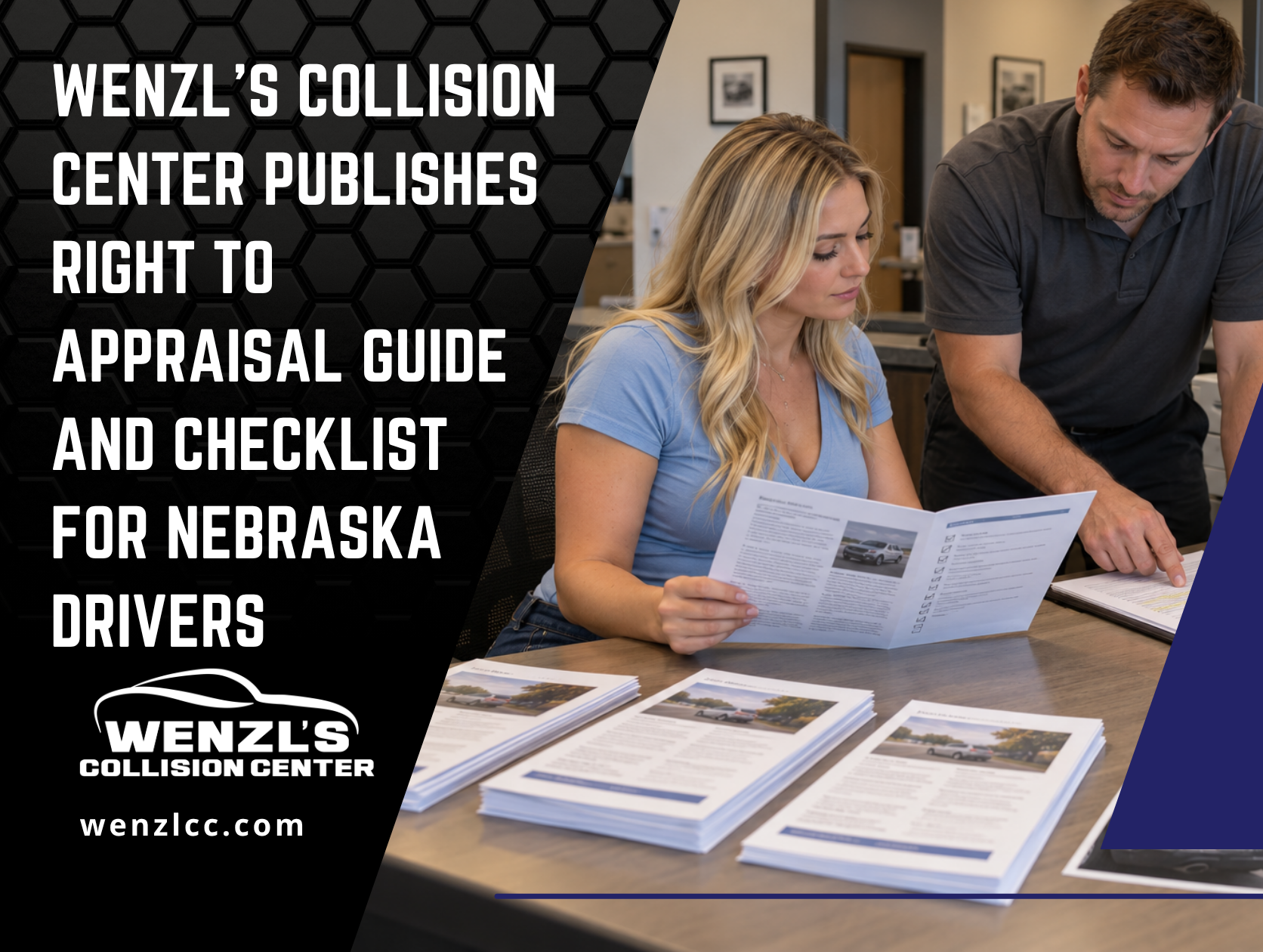
Wenzl’s Collision Center is publishing a consumer guide and free checklist to help Nebraska drivers understand the Right to Appraisal when an insurance company’s estimate does not align with the documented cost of collision repairs. The educational resources explain how the appraisal clause works, when it may apply, and what vehicle owners should review before accepting an insurance settlement.
The newly released Right to Appraisal Guide provides an overview of insurance estimate disputes, appraisal procedures, potential costs, and documentation requirements. A companion Right to Appraisal Checklist gives drivers a practical reference for reviewing estimates and organizing information before pursuing the process.
The guidance addresses a situation that can arise after an accident: a repair facility identifies necessary repair operations that are not fully reflected in the insurer’s estimate. Disagreements may involve replacement parts, labor operations, manufacturer repair procedures, diagnostic scanning, or Advanced Driver Assistance Systems (ADAS) calibration.
The Right to Appraisal is a contractual dispute-resolution provision included in many automobile insurance policies. Depending on the policy’s wording, it may allow the policyholder and insurer to obtain an independent determination of the amount of a covered loss when they cannot reach an agreement.
The November guide emphasizes an important distinction: appraisal generally addresses the amount of loss, not whether an insurance policy covers the claim. It does not automatically override policy provisions concerning deductibles, replacement parts, or other coverage conditions.
The resources identify two situations in which appraisal may be relevant. The first involves a disagreement over the documented cost of repairing a damaged vehicle. The second involves a total-loss settlement when a vehicle owner disputes the insurer’s assessment of the vehicle’s actual cash value.
For repair-cost disagreements, documentation is especially important. An initial insurance estimate may not include every operation identified through a detailed inspection or subsequent vehicle disassembly.
Through its auto body repair services, Wenzl’s Collision Center evaluates collision damage and develops repair documentation based on the vehicle’s condition and applicable manufacturer information.
The guide identifies manufacturer repair procedures, diagnostic scan reports, photographs, detailed estimates, and supporting repair information as materials that may help explain disputed costs.
For example, a vehicle manufacturer may specify particular repair methods, structural procedures, or electronic system requirements following certain types of collision damage. These operations may not be immediately apparent from an exterior inspection.
The companion checklist encourages drivers to consider appraisal when an estimate appears to omit documented repair operations, when required electronic system procedures remain disputed, or when a significant disagreement persists after supplemental estimates and additional inspections.
The checklist also identifies documents to gather before pursuing the process, including the repair facility’s itemized estimate, relevant manufacturer procedures, diagnostic reports, photographs, and the insurance policy’s appraisal provisions.
The guide describes the typical appraisal process as beginning with a written request to invoke the applicable policy clause. The policyholder and insurer generally select their own appraisers, who evaluate the disputed amount using supporting documentation.
If the appraisers cannot agree, the process may involve a neutral umpire. Under commonly used appraisal provisions, agreement between two of the three participants establishes the amount of loss, subject to the applicable policy language and legal requirements.
Vehicle owners should review their policies carefully because appraisal rights, appointment procedures, deadlines, and requirements can vary. Some policies may require additional conditions to be satisfied before the process can proceed.
The November guidance also addresses potential expenses. Policyholders generally pay their own appraiser, while umpire costs may be divided between the parties. An insurance deductible ordinarily remains applicable according to the policy’s terms. Wenzl’s Collision Center encourages drivers to consider the amount in dispute alongside the potential cost of appraisal before deciding whether the process is appropriate.
The educational materials also discuss Nebraska drivers’ ability to select their preferred repair facility. An insurer may recommend a participating repair shop, but vehicle owners are not required to accept a recommendation simply because it comes from their insurance company.
Co-owner Kelli Wenzl brings more than 20 years of previous experience as an insurance claims adjuster to the family-operated business. Her background informs the company’s approach to explaining insurance estimates, documenting repairs, and helping customers understand the claims process.
The guide further distinguishes appraisal from diminished-value claims. A disagreement over a vehicle’s resale value after an accident may involve different legal and insurance considerations than a dispute over repair costs or total-loss valuation.
For Lincoln drivers, the publication’s central message is that an insurance estimate is not necessarily the final determination of a disputed loss amount. Reviewing policy language, obtaining a documented repair estimate, and understanding available dispute-resolution procedures can help vehicle owners make informed decisions.
The guide and checklist are intended for general educational purposes and do not constitute legal advice. Appraisal rights and procedures depend on the applicable insurance policy and circumstances.
Wenzl’s Collision Center is an independent, family-owned collision repair business serving Lincoln, Nebraska, since 1971. Located at 4515 N 62nd Street, Lincoln, NE 68507, the company provides collision repair, auto body repair, and related services. Vehicle owners can contact the shop at (402) 466-0821 for information about repair estimates and appointments.
###
For more information about Wenzl’s Collision Center, contact the company here:
Wenzl’s Collision Center
Kelli & Martin Wenzl
(402) 466 0821
kwenzl@wenzlcc.com
4515 N 62nd St, Lincoln, NE 68507

