
Carriage Shoppe Highlights the Importance of Pre-Repair and Post-Repair Vehicle Measurements
Fort Collins, CO - November 18, 2026 - PRESSADVANTAGE - Carriage Shoppe, part of Yoder Collision Network, is presenting
Press Release Disclaimer: This is a press release distributed through the XPR Media network. It has not been independently verified by our newsroom.

Fort Collins, CO – November 18, 2026 – PRESSADVANTAGE –
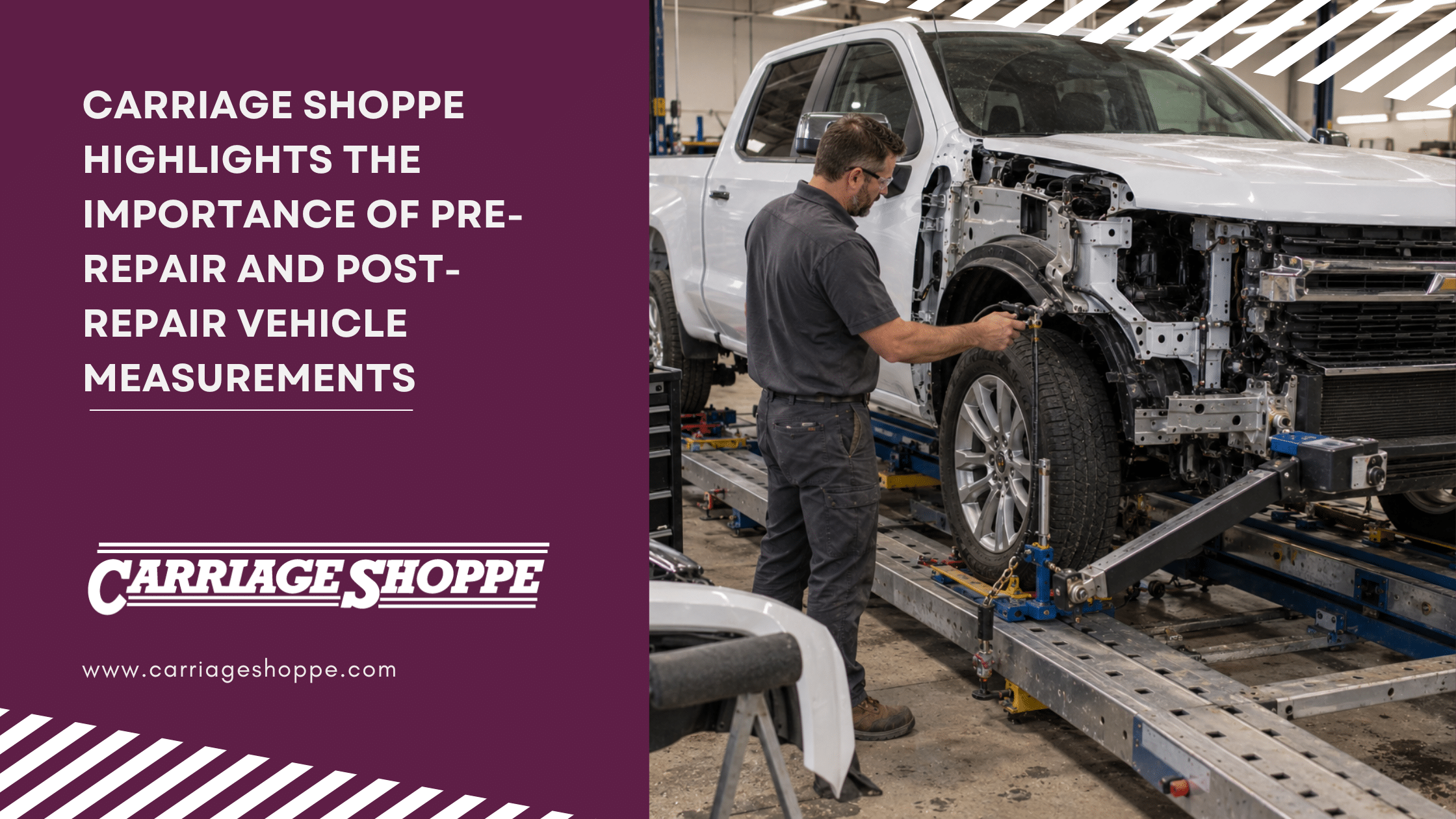
Carriage Shoppe, part of Yoder Collision Network, is presenting November consumer guidance explaining how vehicle measurements contribute to collision damage assessment and structural repair verification. The information outlines three stages of the measurement process: identifying structural changes before repairs, using measurement data during repair planning, and verifying affected vehicle dimensions after repairs are completed.
The guidance addresses a distinction between visible collision damage and changes to underlying vehicle structures. An accident can affect structural reference points, suspension mounting locations, or body openings without producing obvious exterior misalignment. Appropriate measurements can help identify these conditions when structural damage is suspected.
Pre-repair measurement is the first stage covered in the publication. Vehicle manufacturers establish dimensional specifications for structural reference points, including certain rails, mounting locations, and body openings. Technicians can compare relevant measurements with these specifications to identify areas requiring further evaluation.
For example, a side-impact collision may affect structural components surrounding a door opening, while an impact near a wheel may alter adjacent mounting locations. These conditions are not always apparent from exterior panel alignment. The need for structural measurement depends on the vehicle’s construction, damage location, and applicable manufacturer procedures.
Information about accident-related assessment and restoration is available through Yoder Collision Network’s collision repair services. The process of evaluating collision damage may include disassembly and additional inspections when affected structural components are not fully visible.
The second stage involves using measurement findings to support repair planning. Modern vehicles incorporate high-strength steel, aluminum, and other materials with different repair limitations. Manufacturer instructions determine whether affected components may be straightened, repaired using approved methods, or replaced.
Measurement results provide information about dimensional changes but do not independently determine the appropriate repair method. Technicians must also consider material condition, structural design, and manufacturer restrictions involving heating, welding, sectioning, and component replacement.
Depending on the vehicle and repair requirements, facilities may use electronic or mechanical measuring equipment to evaluate selected structural reference points. Reliable results depend on correct equipment setup, appropriate vehicle dimension data, and proper measurement procedures. Measurement findings can also support documentation when additional structural damage is identified during repairs.
Yoder Collision Network provides information about accident-related restoration through its auto body repair services. Additional damage discovered during disassembly or measurement may require revised repair plans, replacement components, or supplemental insurance documentation.
The third stage involves post-repair structural verification. When applicable structural repairs are completed, technicians may measure affected reference points again to determine whether they meet the manufacturer’s specified dimensions and tolerances. These results can document the dimensional condition of repaired structural areas.
Exterior panel alignment and paint finish remain important quality considerations, but they do not replace structural measurement when it is required. A vehicle may appear properly aligned while an underlying reference point still requires evaluation. Conversely, dimensional measurements alone do not establish that every mechanical, structural, or electronic repair requirement has been completed.
The guidance also explains the relationship between structural measurement and other vehicle systems. Certain collisions may affect steering or suspension mounting locations, while repairs involving electronic sensors may require separate diagnostic or calibration procedures. These inspections serve different purposes and depend on the affected components and manufacturer instructions.
Vehicle manufacturers design structural components to manage collision forces and support the passenger compartment. Restoring applicable structural dimensions can be part of addressing collision damage, but measurements alone cannot guarantee future crash performance. Material condition, joining methods, component replacement, and corrosion protection must also be considered where required.
Information about manufacturer-focused repair qualifications is available through Yoder Collision Network’s OEM certification information. Certification requirements may differ by vehicle manufacturer and may apply to specific facilities or vehicle brands rather than every location within the network.
The November guidance identifies repair documentation as another consideration for vehicle owners. When measurements are performed, available records may show the condition of selected reference points before and after structural repairs. These documents can accompany final invoices, supplemental estimates, and other records describing the completed work.
Not every collision requires extensive structural measurement or correction. The appropriate evaluation depends on the location and severity of the damage, vehicle construction, and manufacturer requirements. For repairs involving affected structural reference points, measurement data can provide information that visual inspection alone may not establish.
Carriage Shoppe’s November consumer guidance explains how pre-repair assessment, measurement-supported repair planning, and post-repair verification contribute to documenting structural collision repairs. The information is intended for vehicle owners reviewing damage assessments and repair documentation following an accident.
About Carriage Shoppe
Carriage Shoppe is part of Yoder Collision Network and serves Fort Collins and surrounding Northern Colorado communities. The network provides collision repair, auto body repair, paintless dent repair, fleet collision repair, and related vehicle restoration services through its Carriage Shoppe, ABRA Fort Collins, and ABRA Greeley locations.
###
For more information about Carriage Shoppe, contact the company here:
Carriage Shoppe
Micah
970 482 3597
officestaff@carriageshoppe.com
327 S Link Ln, Fort Collins, CO 80524
